
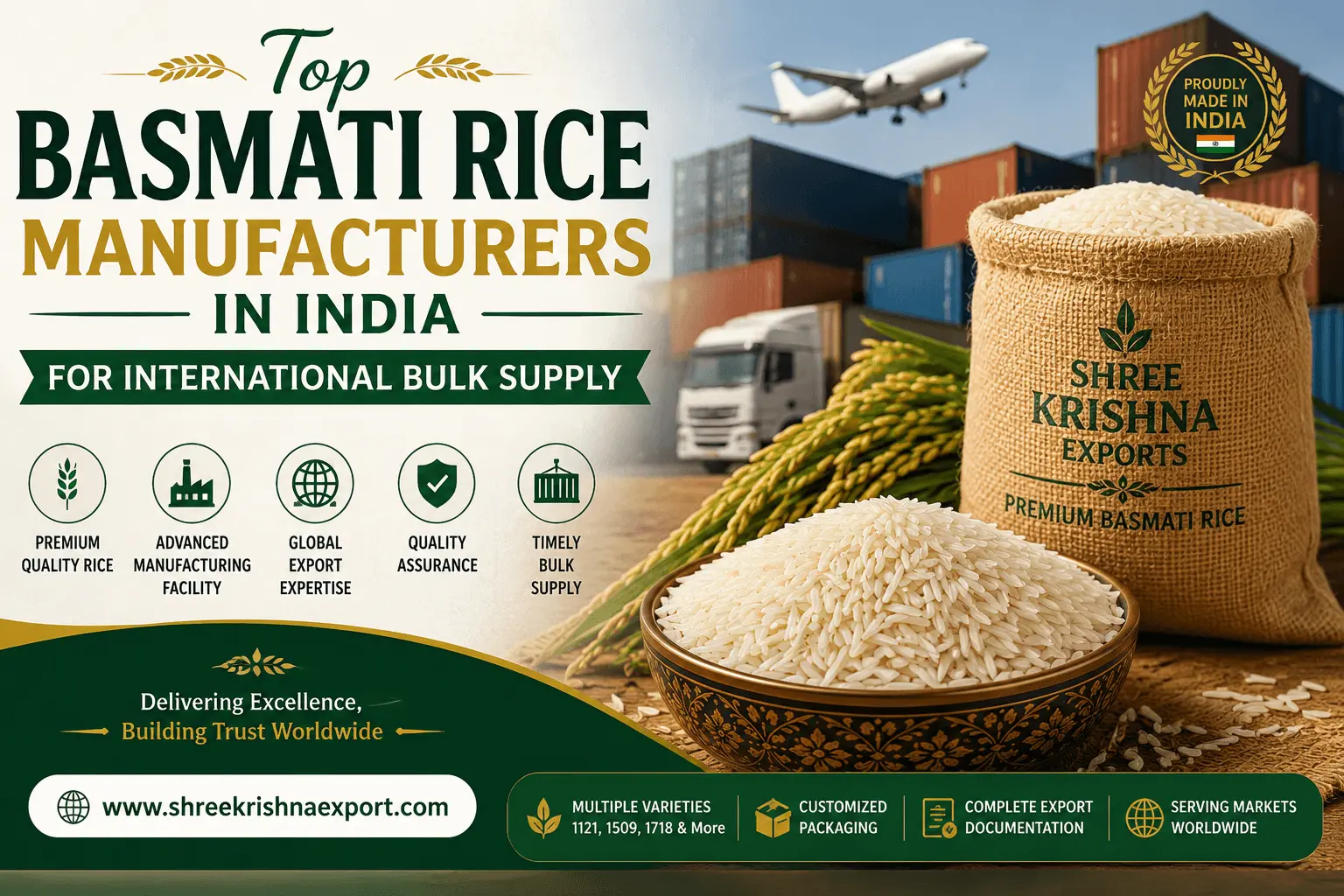
Basmati rice grown in India has been popular for several decades. Be it the buyers from the Middle East or Europe or from North America or Africa, or Asian countries, basmati rice is sourced by all of them. And considering the strong global demand for basmati rice, India remains one of the leading sourcing destinations for international buyers.
We at Shree Krishna Exports, being an experienced manufacturer and exporter of basmati rice, understand what expectations buyers come with. It is not only bulk quantity but also consistent quality, timely shipments, and a hassle-free export experience that help buyers build trust in their markets. This blog consists of some insights to help buyers make the right purchase from the top manufacturers with ease.
Choose the Right Basmati Rice Variety for International Bulk Supply
International supply means coming across varying basmati rice requirements. With different cuisines being prepared across different nations, variation in the demand for rice comes naturally according to customers’ preferences. So, buyers must ensure that they go for manufacturers who offer multiple basmati varieties under one roof. Some of the most popular basmati varieties exported from India include:
- 1121 Basmati Rice
- 1509 Basmati Rice
- 1718 Basmati Rice
- Traditional Basmati Rice
- 1121 Steam Basmati Rice
- 1121 White Sella Basmati Rice
- 1121 Golden Sella Basmati Rice
Questions every buyer should ask before placing a bulk order
How often do you ask the right questions before choosing a basmati rice manufacturer? Many buyers evaluate rice primarily based on its appearance, which may lead to poor purchasing decisions. As manufacturers ourselves, we always recommend that every bulk buyer request rice samples before placing a final order.
This not only increases buyers’ trust and satisfaction but also minimizes the number of complaints later on. To help you more with the same, we have recommended a few questions below that you must ask before finalizing a manufacturer from India for global supply. The questions include:
· Can they maintain consistent quality across every shipment?
· Do they have prior experience serving international markets?
· Do they provide customized packaging solutions?
· Are they capable of meeting bulk orders on time?
· Do they provide complete export documentation and a quality testing report?
Why Price Should Not Be the Only Factor When Choosing a Basmati Rice Manufacturer?
Low prices seem attractive to every buyer, but do they offer the same value as well? Before you reach out for a low price or compare manufacturers based on price, understand this well. The price cannot be the deciding factor, so do consider differences in grain quality, ageing, packaging, or consistency. The table below highlights the key factors buyers should compare before placing an order.
| Buying Factors | Why It Matters |
| Quality of Grains | Better taste, better appearance, and customer satisfaction |
| Manufacturing Capacity | For reliable bulk supply |
| Quality Standards | Reduces the number of complaints and return orders |
| Packaging Options | Supports retail and wholesale sales |
| Export Experience | Smooth international shipments |
Why Ageing Matters More Than Buyers Realise?
Freshly milled basmati rice is not the best basmati rice. Ageing improves the aroma, extends shelf life, and makes the grains cook up longer and fluffier. Most quality exporters age their rice for at least 12 months before shipping, and premium buyers often ask for 18 to 24 month aged stock. If a supplier offers unusually low prices without mentioning ageing duration at all, that is often where the compromise is hiding.
Documents That Protect the Buyer, Not Just the Exporter
Every serious basmati export from India involves a standard set of paperwork, including an FSSAI License, APEDA Registration, Phytosanitary Certificate, Certificate of Origin, Quality Certificate, and Fumigation Certificate. Buyers in the European Union also need a Certificate of Inspection from the Export Inspection Council as per current DGFT norms, while manufacturers exporting to Saudi Arabia require SFDA accredited certification along with ISO 22000 or HACCP compliance. Buyers should ask for these documents upfront rather than after the order is placed. A manufacturer who hesitates to share them is usually a red flag.
India’s Position in the Global Market Right Now
India exported over 60 lakh metric tonnes of basmati rice in 2024-25, worth close to Rs. 50,000 crores, with Saudi Arabia, Iraq, Iran, UAE, and Yemen as the leading buyers. India alone supplies close to 70 percent of the world’s total basmati rice exports, backed by trade relationships with more than 140 countries. That said, 2026 has not been entirely smooth. Regional tensions around key shipping routes in West Asia have disrupted logistics and pushed up freight costs, leading to a dip in shipment volumes earlier this year. For buyers, this makes it even more important to work with exporters who have diversified logistics and can absorb such disruptions without missing delivery timelines.
Conclusion
If you have been choosing the top basmati rice manufacturers based on the price they offer, then start reconsidering. Instead, go for a manufacturer or supplier that works on quality consistency, hygienic processing, customized packaging, and export documentation. By catering to all these requirements successfully, we at Shree Krishna Exports strive to meet the bulk sourcing requirements of buyers across international markets.
Faq’s (Frequently Asked Questions)
Popular Basmati rice varieties for international bulk supply include 1121 Basmati Rice, 1509 Basmati Rice, 1718 Basmati Rice, Traditional Basmati Rice, and different Steam and Sella Basmati Rice varieties.
Yes, many Basmati rice manufacturers and exporters offer customized packaging and private labelling solutions based on wholesale, retail, and international market requirements.
Buyers should check product quality, manufacturing capacity, quality standards, export experience, packaging options, and the manufacturer’s ability to maintain consistent supply.
Rice samples help buyers evaluate grain quality, appearance, and other product characteristics before finalizing a bulk order.
Price alone does not determine overall product value. Buyers should also consider grain quality, consistency, processing standards, packaging options, production capacity, and export experience.