
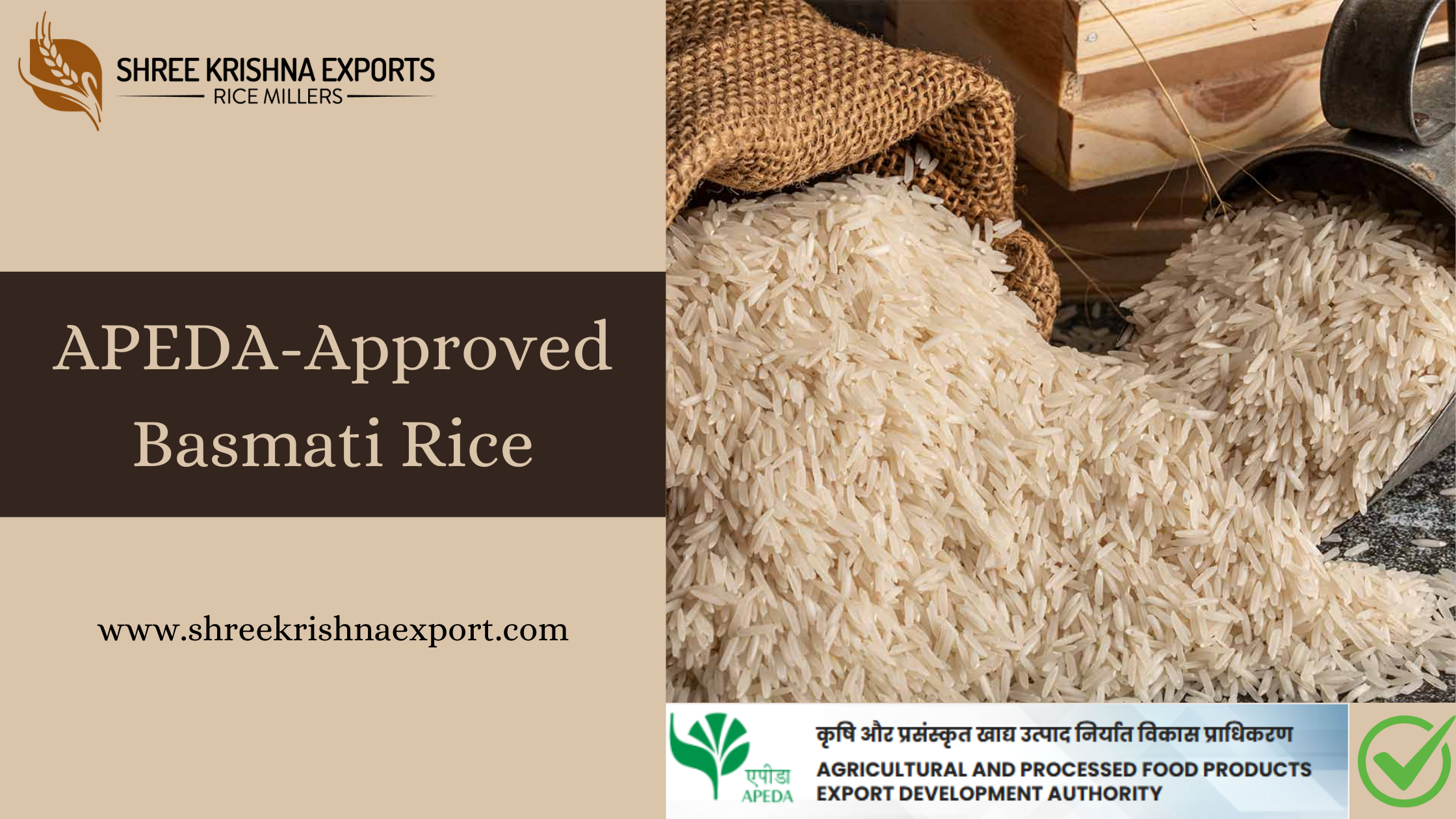
Basmati rice export and import business is running on trust. And that comes only when the exporters offer the surety that they are supplying quality tested and APEDA-approved basmati rice. For international buyers, credibility is a non-negotiable factor. Buyers across global markets look for assurance that the rice they import meets strict quality, safety, and origin standards. This is where APEDA approval plays a decisive role and to become a leading basmati rice exporter, it is a must.
Being one of the top exporters, we understand that compliance is not only about paperwork. It is also about building long term confidence with importers, regulators, and consumers. To ensure the same APEDA approval is a must for basmati rice, however, most exporters are unaware of the same and fail to make connections with international buyers. In this blog, we are sharing a few reasons why APEDA certification is a must for exporting basmati rice.
Helps establish authenticity and origin assurance
Basmati rice holds a protected identity and only specific varieties grown in designated regions are recognized globally as authentic basmati. APEDA approval ensures that the rice being exported adheres to these defined parameters. Through registration and verification, exporters are able to prove the geographical origin and varietal purity of the rice. For international buyers, this authenticity is critical. Many importing countries enforce strict regulations to prevent mislabeling and adulteration. APEDA approval acts as a seal of trust that confirms the rice is genuine basmati and sourced responsibly. This reduces the risk of shipment rejection, trade disputes, and reputational damage, making compliance smoother at every stage of export.
Maintains quality control and food safety compliance
Export markets demand consistent quality, proper aging, and adherence to food safety norms. APEDA approval requires exporters to follow defined standards related to processing, storage, and handling. This ensures that the rice maintains its natural aroma, grain length, and cooking characteristics by the time it reaches overseas markets. Compliance with these guidelines also aligns exports with international food safety expectations. Buyers gain confidence that the product has undergone proper checks and meets regulatory benchmarks. When we export APEDA-approved basmati rice, we are able to prove that quality is not incidental but systematically controlled, helping us build stronger relationships with importers who value reliability.
Improves traceability and transparency in the export process
One of the most important aspects of export compliance is traceability. APEDA approval enables a structured system where the rice can be tracked from farm level procurement to final shipment. This transparency is increasingly demanded by global buyers who want clarity on sourcing, processing, and compliance history. Such traceability supports smoother customs clearance and simplifies documentation checks in importing countries. It also provides reassurance during audits or inspections. For exporters, this transparency strengthens operational discipline, while for buyers, it offers peace of mind that they are sourcing from a responsible and compliant supply chain.
Conclusion
APEDA approval is not a mere formality; but it is crucial for basmati rice export compliance. It ensures authenticity, reinforces quality control, enables traceability, and opens doors to regulated international markets. For exporters committed to responsible growth and global trust, compliance through APEDA becomes essential rather than optional. At Shree Krishna Exports, we always deliver APEDA-approved basmati rice, so that we can meet international expectations and strengthens lasting relationships with buyers across the world.